Choosing a Caribbean island for a family holiday is not simply a matter of picking the sunniest beach. What separates a smooth family trip from a stressful one usually comes down to three things: how easily young children can enter the water, how much walking and queuing the day involves, and whether the island has the infrastructure to handle nappies, nap schedules, and a hungry five-year-old at 5pm. The islands below have been selected because they solve those practical problems in different ways. Some do it through shallow, reef-protected bays. Others do it through all-inclusive resorts where the logistics disappear. A few do it through sheer variety, so that a family with a toddler and a ten-year-old can both find something that works.
The order below reflects how strongly each destination matches the specific needs of families travelling with children aged roughly one to twelve. That means calm water and short transfers carry more weight than nightlife or fine dining. Where an island is better suited to older children, that is stated plainly. Where a destination works best as part of a multi-island trip rather than a standalone base, that is explained too.
1. Turks & Caicos
Grace Bay on Providenciales is the single strongest argument for Turks and Caicos as a family destination. The beach shelves so gently that a toddler can wade thirty metres from shore and still be standing in water below waist height. The sand is powdery and free of rocks, which means no reef shoes and no tears. For parents, that combination removes the constant vigilance that makes beach days with young children exhausting.
The island’s resort infrastructure leans heavily into family needs. Beaches Turks & Caicos, the dominant family resort on Grace Bay, operates five village-style accommodation areas, a 45,000-square-foot waterpark, 20 restaurants, and a Sesame Street character programme that runs from breakfast through evening parades. The kids’ camp accepts children from infancy through the teenage years, with supervised evening sessions until 9pm. That matters because it gives parents the option of a quiet dinner without arranging a separate babysitter. The resort also offers private nanny services, including carers trained to support children with special needs.
Beyond the resort, Providenciales has a handful of genuinely child-friendly excursions. The semi-submarine tour lets children see reef fish without getting wet. The Thursday Fish Fry at Bight Park is loud, crowded, and exactly the kind of local evening that children remember. Jojo the dolphin, a long-time resident of the islands, occasionally approaches boats in the Grace Bay area, though sightings are never guaranteed. The main practical constraint is cost: Turks and Caicos is one of the more expensive Caribbean destinations, and food and activities outside an all-inclusive package add up quickly. For families with very young children who want the simplest possible holiday, the all-inclusive model here is difficult to beat.
2. Aruba
Aruba sits outside the main hurricane belt, which makes it a reliable choice for families travelling during the summer months when other islands carry weather risk. The island’s southern and western coasts are calm and shallow, with Baby Beach in San Nicolas being the standout for young children. The water there is knee-deep for a considerable distance, and a reef offshore breaks any swell before it reaches the shore.
The island’s compact size is a practical advantage. Driving from the hotel strip in Palm Beach to Baby Beach takes around thirty minutes, so families can split the day between a resort pool morning and a calmer beach afternoon without losing hours in transit. De Palm Island, a private island reachable by ferry, operates a waterpark with body slides and a kids’ play area, plus snorkelling and a small beach. The island’s animal attractions are well suited to children: the Donkey Sanctuary allows feeding and brushing, the Butterfly Farm has a walk-through enclosure with species from around the world, and Philip’s Animal Garden rescues exotic animals.
Aruba’s resort strip is dense with family-friendly properties, many of which run kids’ clubs for ages four to twelve. The trade-off is that Palm Beach and Eagle Beach are busier than the island’s southern beaches, and the high-rise hotel area can feel more like a resort corridor than a Caribbean town. Families who prioritise calm water and easy logistics over atmosphere tend to be very happy here. Those who want a quieter, more local feel often prefer the low-rise area around Eagle Beach or a rental in Noord.
3. Punta Cana, Dominican Republic
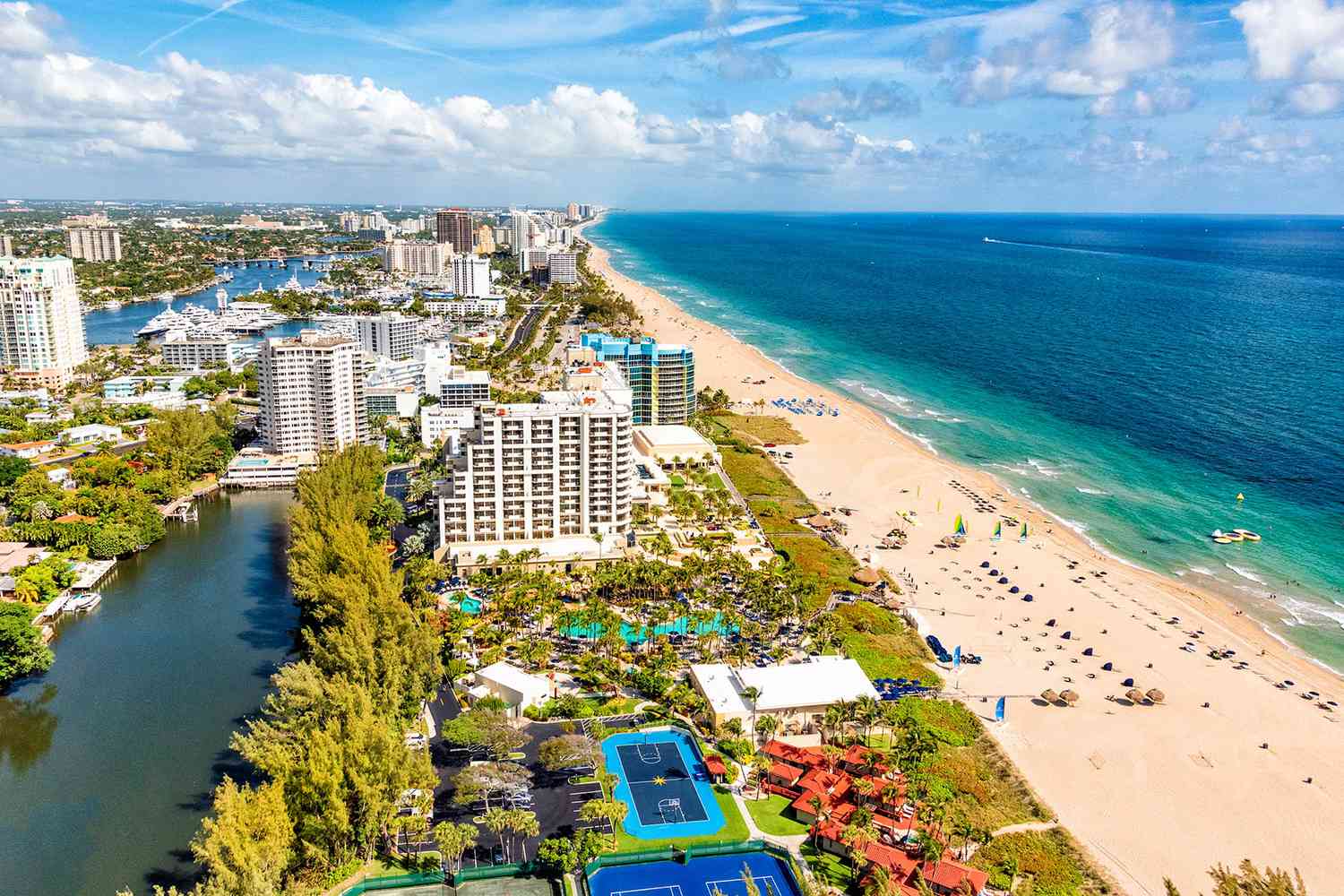
Punta Cana has become the Caribbean’s most concentrated cluster of family all-inclusive resorts, and the reason is straightforward: the resorts here are large, the beaches are long, and the competition keeps standards high. Bavaro Beach runs for miles with soft white sand and water that is calm enough for young swimmers on most days.
Several resorts stand out for families specifically. Club Med Punta Cana runs dedicated children’s clubs from babies through teenagers, with children under four staying free. Nickelodeon Hotels & Resorts Punta Cana has a waterpark, character interactions, and a kids’ club for ages four to twelve. Bahia Principe Fantasia operates a kids’ club and family rooms with separate children’s sleeping areas. Hard Rock Hotel & Casino Punta Cana, despite the adult-oriented name, has a substantial family section with waterslides and a lazy river. Dreams Onyx Resort & Spa includes an Explorer’s Club for younger children and a Core Zone teen club, plus a family pool with slides.
Outside the resorts, the Dominican Republic offers excursions that work for older children: horseback riding on the beach, snorkelling trips, waterfall visits to the Damajagua cascades, and seasonal whale watching in Samaná between January and March. The main caveat is that Punta Cana is a resort destination rather than a town destination. Families who want to walk to local restaurants or explore independently will find that more difficult than on islands like Barbados or Curaçao. For families who want everything contained and predictable, it is one of the easiest Caribbean holidays to arrange.
4. Jamaica
Jamaica works for families who want more than a beach. The island has a scale and variety that few other Caribbean destinations match, from the misty Blue Mountains to the waterfalls and rainforest of Ocho Rios and Port Antonio. For children old enough to handle a bit of adventure, that variety translates into days that feel genuinely different from one another.
Dunn’s River Falls near Ocho Rios is the island’s best-known family activity. The climb involves holding hands in a human chain and walking up a series of natural cascades. It is not suitable for very young children or anyone with mobility limitations, but children aged six and up generally love it. Mystic Mountain, also near Ocho Rios, runs a bobsled ride through the rainforest that mimics the Jamaican bobsled team’s Olympic runs, plus a zip-line and a sky explorer chairlift. For younger children, the beaches at Negril’s Seven Mile Beach are calm and shallow, and the sunset there is a reliable evening activity that costs nothing.
Beaches Negril and Beaches Ocho Rios are the two most family-focused resorts on the island, both operating Sesame Street programming and kids’ camps from infancy through the teenage years. Round Hill Hotel and Villas in Montego Bay runs a kids’ club and offers villas with private pools, which suits families who want more space and a quieter setting. Half Moon in Montego Bay has a children’s programme and allows children under twelve to stay free in a parent’s room outside peak Christmas and New Year periods. Jamaica’s main practical drawback for families is that some areas, particularly around Montego Bay, have a higher rate of petty crime than other Caribbean destinations. Staying within resort grounds or on organised excursions is the standard approach.
5. Barbados
Barbados is one of the most family-friendly islands in the Caribbean for a simple reason: it has the infrastructure of a settled, prosperous island rather than a resort enclave. Roads are good, the island is easy to navigate, and there are beaches on both the calm west coast and the more surf-exposed east coast. That means families can choose their conditions rather than being stuck with whatever the sea decides to do.
The west coast beaches, particularly around Holetown and Paynes Bay, are calm and shallow, with the kind of gentle entry that suits toddlers. The south coast around Accra and Rockley is livelier, with more restaurants and shops within walking distance. The Barbados Wildlife Reserve in the north of the island allows children to see green monkeys, tortoises, and deer in a natural setting. The Atlantis Submarines tour takes passengers down to a reef in a submarine, which works for children who are too young to snorkel but want to see fish. Harrison’s Cave, a limestone cavern with stalactites and stalagmites, is a half-day excursion that works well for children aged five and up.
Sugar Bay Barbados is an all-inclusive resort where children under three stay free and the first child aged four to sixteen also stays free, which makes it one of the more affordable family options on the island. The resort runs a kids’ club for ages four to twelve. Colony Club, a Marriott Luxury Collection property, operates a seasonal children’s programme for ages three to twelve. Families who prefer self-catering often stay in the Holetown or Saint Lawrence Gap areas, where apartments and villas are plentiful. Barbados is also one of the easier islands to reach from the UK, with direct flights from London taking around eight hours.
6. St Lucia
St Lucia offers something that most Caribbean islands do not: genuine natural drama that children find genuinely exciting. The Pitons, two volcanic spires rising from the sea, are the island’s signature sight. The drive between them, along the west coast, passes through rainforest, fishing villages, and banana plantations. For a family, that means the journey between activities is itself interesting rather than something to endure.
The family-friendly activities are concentrated in the Soufrière area. The Sulphur Springs volcano is a drive-in volcano where children can see bubbling mud pools and steaming vents. The adjacent mud baths allow children to cover themselves in mineral-rich mud before washing off under a waterfall at Toraille. It is messy, smelly, and reliably popular with children. Diamond Falls Botanical Gardens and Mineral Baths offer a gentler version of the same experience, with heated mineral pools and a waterfall that can be viewed from a short, flat path. The Aerial Tram at Rainforest Adventures takes families up through the canopy in a gondola, with a guided nature walk at the top.
On the west coast, Reduit Beach in Rodney Bay is the island’s most family-friendly beach, with calm water, plenty of space, and restaurants and facilities nearby. Vigie Beach, closer to Castries, is quieter and similarly calm. Windjammer Landing on Labrelotte Bay operates a Jacquot Fun Club for children and offers villas with private plunge pools, which suits families who want space and a kitchen. The Landings Resort runs a kids’ club for ages four to twelve. St Lucia is a good choice for families with children aged five and up who are comfortable with a bit of walking and a few boat rides. Families with very young children tend to stay on the west coast and use the resort as a base rather than trying to see the whole island.
7. Grand Cayman, Cayman Islands
Grand Cayman is not an all-inclusive island, and that is precisely why it works for some families. The island is safe, easy to drive around, and has a strong independent food scene. Families who prefer to explore rather than stay within a resort compound often find that Grand Cayman gives them more freedom than the all-inclusive islands.
Seven Mile Beach is the centre of family activity, a long sweep of soft sand with calm water and a public beach access that means families are not confined to hotel grounds. The beach is walkable for miles, with beach bars and restaurants along the way. Stingray City, a sandbar in the North Sound where wild stingrays gather in shallow water, is the island’s signature family excursion. Children can stand in waist-deep water while stingrays glide past. The Cayman Turtle Centre, despite some debate about its conservation practices, allows children to hold turtle hatchlings and see larger turtles in a lagoon. The Queen Elizabeth II Botanic Park has a blue iguana breeding programme and flat, easy walking trails.
The Westin Grand Cayman Seven Mile Beach Resort & Spa offers family rooms with pull-out sofas and connecting rooms, plus an on-site water sports outfitter. The Ritz-Carlton, Grand Cayman operates Starfish Cay, a children’s waterpark, and the Ambassadors of the Environment programme, which runs eco-adventures including snorkel safaris and mangrove kayaking. Kimpton Seafire Resort + Spa runs Camp Seafire for children aged five to twelve. For families who want more space, the island has a large stock of condos and villas, particularly along Seven Mile Beach and in the quieter East End. Grand Cayman is one of the more expensive Caribbean destinations, but its safety and ease of navigation make it a strong choice for families who want to explore independently.
8. Puerto Rico
Puerto Rico is a Caribbean destination that does not feel like a small island. It has cities, motorways, rainforests, and a depth of history that makes it feel more like a small country than a beach destination. For families, that means the holiday can include a day in a historic fort, a day hiking in a rainforest, and a day at a calm beach without repeating the same experience.
Old San Juan is a walkable neighbourhood with blue cobblestones, brightly coloured buildings, and two massive Spanish forts, El Morro and San Cristóbal, that children can explore. The lawn in front of El Morro is a popular spot for kite flying. El Yunque National Forest, the only tropical rainforest in the US national forest system, has paved trails, waterfalls, and a visitor centre that explains the ecosystem in accessible terms. The bioluminescent bays at Fajardo and La Parguera are night-time kayak trips where the water glows when disturbed; the Fajardo bay is the more accessible of the two for families. For beach days, Isla Verde near San Juan has calm water and a long stretch of sand with hotels and restaurants nearby.
Puerto Rico’s resort options range from large hotels in the San Juan area to quieter properties on the east coast. The Hyatt Regency Grand Reserve in Rio Grande has a waterpark and family rooms. El Conquistador Resort has a waterpark and a private island. Copamarina Beach Resort & Spa in Guánica is a quieter option on the south coast, with calm water and a more laid-back atmosphere. Because Puerto Rico is a US territory, families travelling from the US do not need passports, which removes a layer of planning. The island is also one of the more affordable Caribbean destinations for families, with a wide range of accommodation from budget to luxury.
9. Bahamas: Nassau & Paradise Island
The Bahamas has the most developed family entertainment infrastructure in the Caribbean. Atlantis Paradise Island is the anchor: a resort complex with a 141-acre waterpark, multiple beaches, a marine habitat with sharks, rays, and dolphins, and a children’s programme that runs from morning through evening. For families with children aged five to twelve, Atlantis is difficult to match in terms of sheer activity density. The resort’s Aquaventure waterpark includes a lazy river, a mile-long rapids ride, and slides of varying intensity, so children of different ages can find something that suits them.
Baha Mar, on Cable Beach, is Atlantis’s main competitor and has invested heavily in family facilities. The resort opened Sandy Cay, an on-the-beach playground for children aged two to fourteen, with slides, climbing structures, and a central art installation. Baha Mar also runs a kids’ club for ages three to twelve and has a mini-golf course and a game room. The beach at Cable Beach is calmer and less crowded than the Paradise Island beaches, which some families prefer. For families who want a quieter Bahamian experience, the Out Islands, particularly Eleuthera and Exuma, offer calm beaches and small resorts, but require more planning and internal flights.
Nassau itself is a cruise port, which means the downtown area can be crowded when ships are in. Families staying on Paradise Island or Cable Beach are largely insulated from that. The main practical consideration for the Bahamas is cost: food and activities are expensive, and the resort areas are designed to keep spending on-property. All-inclusive packages or meal plans reduce the shock. The Bahamas is also one of the easier Caribbean destinations to reach from the east coast of the US, with frequent direct flights to Nassau.
10. Antigua
Antigua’s selling point for families is the number of beaches. The island has 365 beaches, one for every day of the year, and many of them are calm, shallow, and uncrowded. That means families can explore different beaches without repeating the same experience, and can usually find a sheltered spot even when the wind is up on one coast.
Dickenson Bay and Runaway Bay on the northwest coast are the most developed family beaches, with calm water and resorts nearby. Long Bay, on the northeast coast, is quieter and has a reef that breaks the swell. Jolly Beach on the west coast has calm water and a wide stretch of sand. For families with children interested in wildlife, Stingray City Antigua allows visitors to stand in shallow water with wild stingrays, and the Antigua Rainforest Canopy Tour has zip lines and a challenge course for older children. Nelson’s Dockyard, a restored Georgian naval dockyard, is a UNESCO World Heritage Site and offers a gentle half-day outing with a museum and a bakery.
Carlisle Bay is one of the most family-focused resorts on the island, with a kids’ club for ages two to six and childcare available for babies from six months. Curtain Bluff runs the CEEBEE kids’ club for ages three to ten, five days a week, with activities including crafts, cookie making, and mocktails. Blue Waters Resort & Spa has a children’s programme for ages five to twelve, run by a British expat, with activities including cricket, fishing, and arts and crafts. Antigua is a good choice for families who want a relaxed beach holiday with the option of a few organised activities, rather than a resort with a waterpark and non-stop entertainment. The island is also relatively easy to reach from the UK, with direct flights taking around eight hours.
11. Curaçao
Curaçao is one of the Caribbean’s most underrated family destinations. It sits outside the hurricane belt, has a dry climate that reduces the risk of rained-out days, and offers a combination of calm beaches and a historic capital that is genuinely interesting for children. Willemstad, the capital, is a UNESCO World Heritage Site with brightly coloured Dutch colonial buildings, a floating market, and a pontoon bridge that swings open to let ships through. Children tend to find the bridge and the market more engaging than the average historic district.
The best family beaches are on the west coast. Mambo Beach has a man-made breakwater that creates a calm lagoon, with the Curaçao Sea Aquarium next door. The aquarium has touch tanks and daily feeding sessions, and operates a semi-submarine that lets children see reef life without snorkelling. Porto Marie and Cas Abao are quieter beaches with calm water and shade. The Curaçao Ostrich Farm allows children to feed ostriches and emus, and the Hato Caves have guided tours through limestone formations with stalactites and stalagmites. For active families, Christoffel National Park has hiking trails of varying difficulty, including a climb to the summit of Mount Christoffel that is manageable for older children.
Sunscape Curaçao Resort operates an Explorer’s Club for children aged three to twelve with Red Cross-certified supervisors. Kunuku Aqua Resort has three large pools with multiple slides and a waterpark suitable for children aged three to ten. Mangrove Beach Corendon Curaçao is an all-inclusive resort with family activities including fish feeding and bracelet making. Curaçao is generally more affordable than islands like Turks and Caicos or Grand Cayman, and its combination of culture and calm beaches makes it a strong choice for families who want a bit of both.
12. Grenada
Grenada is known as the Spice Island, and for families the appeal is a combination of calm beaches and accessible nature. Grand Anse Beach is a two-mile stretch of white sand with calm water and a gentle shelf, making it one of the most family-friendly beaches in the eastern Caribbean. The beach is public, with restaurants and water sports operators along its length, so families are not confined to a resort.
The island’s inland attractions are well suited to children. The Grand Etang National Park has a lake, walking trails, and the chance to see Mona monkeys, which are habituated to visitors and often approach the car park. The Annandale Falls are a short walk from the road and have a pool where children can swim. The River Antoine Rum Distillery, despite the adult-oriented product, is a working historical site that shows how sugar cane was processed, and the waterwheel is still turned by the river. For families interested in chocolate, the Grenada Chocolate Company offers tours that show the process from bean to bar, and the island’s nutmeg and spice plantations are a sensory experience that children tend to remember.
Royalton Grenada, an Autograph Collection all-inclusive, runs a Clubhouse Kids Club with games, cartoons, and playground activities. Spice Island Beach Resort has a calm, swimmable beach and organised activities for younger guests, plus non-motorised water equipment. Mount Cinnamon Resort & Spa has a kids’ club, a pool, and a beach volleyball court. Grenada is a quieter, less developed island than Barbados or Antigua, which means fewer crowds and lower prices, but also fewer resort options and less infrastructure. Families who are comfortable with a more laid-back pace and who value nature over entertainment will find it rewarding.
13. St Maarten / St Martin
St Maarten is a two-nation island, with a Dutch side and a French side, and that split gives it a character that is different from the typical Caribbean resort destination. The Dutch side has the cruise port, the casinos, and the busier beaches. The French side has quieter beaches, better restaurants, and a more relaxed atmosphere. For families, the practical advantage is that the island is small and easy to drive, so a day can include a calm morning on a French-side beach and an afternoon at a Dutch-side attraction without much travel time.
Le Galion Beach on the French side is the island’s best beach for young children. It is sheltered by a reef, the water is shallow and calm, and the beach has soft white sand and shade. Grand Case, also on the French side, has a long beach with calm water and a strip of restaurants and lolos, the local roadside grills. On the Dutch side, Maho Beach is famous for the planes that land directly overhead at Princess Juliana International Airport. The experience is thrilling for older children and adults, but the beach itself is not ideal for swimming, and the jet blast from departing planes can be dangerous for anyone standing too close to the fence.
For organised family activities, Rainforest Adventure Park has zip lines, a ropes course, and a tubing run down a purpose-built channel. Loterie Farm, on the French side, has a natural pool and a zip-line circuit through the trees. The Butterfly Farm has a walk-through enclosure with species from around the world. Sonesta Maho Beach Resort operates a kids’ club, teen zone, and aqua park, and has added miniature golf and a dedicated kids’ play area. St Maarten is one of the easier Caribbean islands to reach, with direct flights from the US and Europe, and its compact size makes it a good choice for families who want variety without long drives.
14. St Kitts and Nevis
St Kitts and Nevis is a two-island nation that offers a quieter, less commercial Caribbean experience. The islands are small, the pace is slow, and the main attractions are historical and natural rather than entertainment-driven. For families with children who are interested in history and wildlife, it is a rewarding destination. For families who need a waterpark and a kids’ club to keep children occupied, it may feel limited.
On St Kitts, the Brimstone Hill Fortress is a UNESCO World Heritage Site with massive stone walls and cannons that children can explore. The St Kitts Scenic Railway is a three-hour loop around the island in a double-decker train, with commentary on the island’s history and a choir that sings on board. The Timothy Hill overlook, where the Atlantic meets the Caribbean, is a short stop with a dramatic view. The island’s rainforest has zip-line tours and hiking trails, including the climb to the summit of Mount Liamuiga, which is a full-day excursion suitable for older children. On Nevis, the Botanical Gardens and the Nevis Peak hike are the main attractions, along with the beaches at Pinney’s Beach, which are calm and uncrowded.
Marriott’s St Kitts Beach Club has a children’s outdoor playground, a shuffleboard court, and a giant chess set. The Park Hyatt St Kitts has a kids’ club and a children’s pool, plus babysitting services. St Kitts and Nevis is one of the less expensive Caribbean destinations, particularly for families who stay in villas or self-catering accommodation. The main drawback is that the islands are less developed for tourism than places like Antigua or Barbados, which means fewer restaurant options outside the resorts and less infrastructure for families with very young children.
15. Virgin Gorda, British Virgin Islands
The Baths on Virgin Gorda are the single best natural playground in the Caribbean for children. Giant granite boulders form a maze of tunnels, ladders, and shallow pools that children can explore for hours. The water is clear, the sand is soft, and the scale of the rocks makes the whole experience feel like an adventure rather than a beach day. The nearby Devil’s Bay is reached through the boulders and has calm, shallow water.
The British Virgin Islands as a whole are better suited to sailing families than resort families. The islands are close together, the water is calm, and the sailing distances are short. Families who charter a boat or stay on one of the smaller islands can set their own pace, moving between snorkelling spots, beaches, and small settlements. Tortola has Cane Garden Bay, a long beach with calm water and a handful of bars and restaurants. Jost Van Dyke has White Bay, which is quieter and has a famously relaxed atmosphere. Anegada is a flat coral island with long, empty beaches and a reef that makes snorkelling easy.
Accommodation options for families are more limited than on the larger resort islands. Oil Nut Bay on Virgin Gorda is a luxury resort accessible only by boat or helicopter, with villas and a kids’ programme. Scrub Island Resort has a marina, a spa, and family-friendly accommodation. The main practical considerations are cost and logistics: the BVI is expensive, and getting between islands requires ferries or a chartered boat. Families who are comfortable with that level of planning will find it one of the most rewarding Caribbean destinations. Those who want everything contained in a single resort should look elsewhere.
16. St John, US Virgin Islands
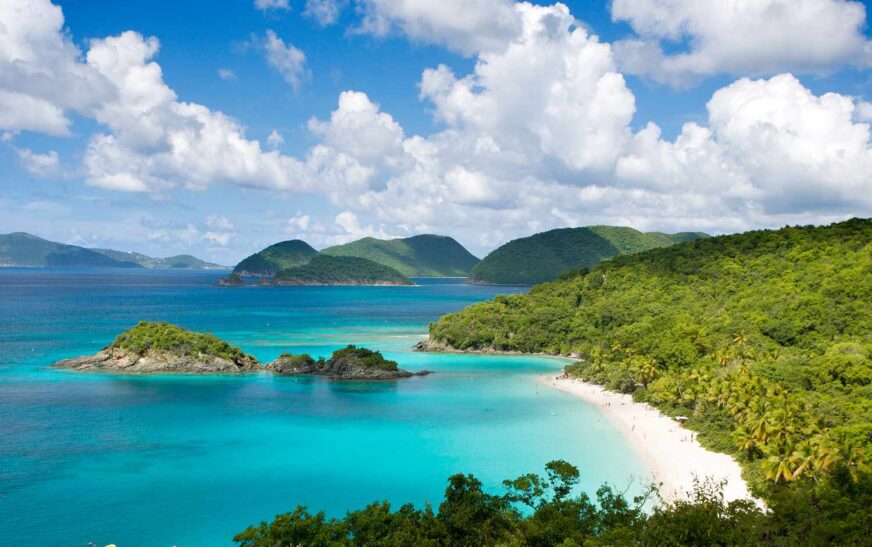
St John is the quietest and least developed of the US Virgin Islands, largely because nearly two-thirds of the island is protected as Virgin Islands National Park. That protection means the beaches are pristine, the trails are well maintained, and development is limited. For families who want a Caribbean holiday that is more about nature than entertainment, St John is one of the best choices in the region.
Trunk Bay is the island’s most famous beach, with an underwater snorkel trail that is marked with signs and suitable for children who are comfortable in the water. The beach has facilities including changing rooms and a snack bar, and lifeguards are on duty during peak periods. Cinnamon Bay has a longer beach and a campground, and the water is usually calm. Honeymoon Beach, reachable by a short hike or a shuttle from Cruz Bay, is quieter and has calm water. The Reef Bay Trail is a four-mile round trip that passes petroglyphs and sugar plantation ruins, with a spur to a waterfall; it is suitable for children aged eight and up who are used to walking.
Accommodation on St John is mostly villas and small resorts rather than large hotels. The Westin St John is the main full-service resort, with a kids’ club and family rooms. Caneel Bay, which was the island’s most famous resort, has been closed since 2017 and its future is uncertain. Families who stay on St Thomas can visit St John as a day trip by ferry, but the island rewards a longer stay. St John is also one of the more expensive US Virgin Islands, and groceries and dining out are costly. The lack of an airport on the island means arriving requires a flight to St Thomas followed by a ferry, which adds a layer of logistics for families with young children.
17. Anguilla
Anguilla’s beaches are its main attraction, and they are exceptional. Shoal Bay East has sand so fine it squeaks underfoot, and the water is calm and clear. Meads Bay and Rendezvous Bay are similarly calm, with gentle shelves and no rocks. For families whose priority is beach time with young children, Anguilla delivers one of the best versions of that experience in the Caribbean.
The island is quiet and undeveloped compared to most Caribbean destinations. There are no cruise ships, no casinos, and no large resorts. That means the beaches are rarely crowded and the atmosphere is relaxed. For children, the main activities are swimming, snorkelling, and sandcastle building. The Dune Preserve at Rendezvous Bay has live music on some afternoons and evenings, which is a pleasant way to spend a late afternoon with children who are old enough to stay up. The Anguilla Arch and the Heritage Collection Museum are small attractions that can fill a half-day.
Accommodation is mostly high-end villas and small luxury resorts. Four Seasons Resort and Residences Anguilla runs a kids’ programme for ages five to twelve, with supervised activities. Aurora Anguilla Resort & Golf Club has a waterpark on its Merrywing side and a supervised kids’ club. Cap Juluca, a Belmond Hotel, has a playground, kids’ club, and childcare service. The main drawback for families is cost and logistics. Anguilla is expensive, and reaching it requires a flight to St Maarten or Puerto Rico followed by a ferry or a small plane. Families who are willing to pay for seclusion and calm will find it worth the effort. Those on a tighter budget will find better value elsewhere.
18. Bonaire
Bonaire is a diver’s island, but it is also one of the most accessible Caribbean destinations for families who want to introduce children to snorkelling and marine life. The island’s reefs are close to shore, the water is calm on the leeward side, and the lack of heavy development means the marine environment is healthy and full of fish.
Klein Bonaire, a small uninhabited island offshore, is reachable by water taxi and has a beach with calm, shallow water and a reef that is ideal for beginner snorkellers. The island has no facilities, so families need to bring water, food, and shade. Sorobon Beach on the east coast is shallow and warm, with a constant breeze that makes it comfortable even on hot days. The Washington Slagbaai National Park at the northern end of the island has hiking trails, beaches, and salt flats where flamingos gather. The Bonaire Donkey Sanctuary allows children to feed and interact with rescued donkeys, and the island’s salt pans are a striking sight, with pink water and white mountains of salt.
Sand Dollar Resort runs a Sand Penny Club for children aged three to six and an Ocean’s Classroom programme for ages six to fifteen, with hands-on marine education. Divi Flamingo Beach Resort operates a Treasures of the Caribbean Kids’ Club with treasure hunts and movie nights. Bonaire is generally more affordable than the more developed resort islands, and its focus on nature and marine life makes it a good choice for families who want an active, educational holiday rather than a resort-based one. The island is also outside the hurricane belt, which makes it a reliable choice for summer travel.
19. Dominica
Dominica is the Caribbean’s nature island, and it is not a beach destination in the conventional sense. The island has few white-sand beaches, and the coastline is mostly rugged and volcanic. What it does have is rainforest, waterfalls, rivers, and hiking trails, and for families who want an active, outdoors-focused holiday, it offers an experience that no other Caribbean island matches.
Titou Gorge is a short swim through a narrow canyon to a waterfall, and it is suitable for children aged six and up who are comfortable in the water. The Emerald Pool is a short walk from the road and has a waterfall and a natural pool that is calm and shallow. Trafalgar Falls is a double waterfall that can be viewed from a platform a short walk from the car park, with a warmer mineral pool nearby. The Indian River, near Portsmouth, is a boat trip through mangroves that was used as a location in Pirates of the Caribbean; children tend to enjoy the birdlife and the eerie atmosphere. Champagne Reef, on the southwest coast, has volcanic bubbles rising through the water, which makes snorkelling feel like swimming through a glass of champagne.
Fort Young Hotel in Roseau has a kids’ club and family rooms, and is well positioned for exploring the island’s attractions. The island is less developed for tourism than most Caribbean destinations, which means fewer resorts and less infrastructure. Families with very young children may find the hiking and water activities challenging. Those with children aged six and up who are active and enjoy nature will find Dominica one of the most memorable Caribbean destinations. Reaching the island usually involves a flight to Antigua or Barbados followed by a connecting flight, which adds time and cost.
20. Martinique
Martinique is a French overseas department, and that means the island feels different from its English-speaking neighbours. The food is French, the roads are good, and the infrastructure is reliable. For families, the main appeal is the combination of calm beaches and accessible nature, with a level of polish that makes travelling with children easier.
Les Salines Beach in Sainte-Anne is the island’s best beach for families, with a long stretch of soft sand, calm water, and shade from trees. Anse Dufour and Anse Noire, on the southwest coast, are smaller coves with shallow water and good snorkelling; Anse Noire has black volcanic sand. The Martinique Zoo in Le Carbet is a well-designed small zoo with monkeys, iguanas, and tropical birds. The Banana Museum, also near Le Carbet, is more interesting than it sounds, with a working plantation and a museum that explains the history of banana cultivation in the Caribbean. Jardin de Balata, a botanical garden in the hills above Fort-de-France, has a canopy walkway through the treetops that children enjoy.
Club Med Buccaneer’s Creek and Club Med Les Boucaniers both offer all-inclusive family packages with kids’ clubs from babies through teenagers. The island also has a wide range of self-catering apartments and villas, particularly around Sainte-Anne and Les Trois-Îlets. Martinique is a good choice for families who want a French Caribbean experience with reliable infrastructure, good food, and a mix of beach and nature activities. The main drawback is that fewer people speak English than on the more tourist-focused islands, which can make independent travel more challenging for families who do not speak French.
21. Tobago
Tobago is the quieter, more relaxed half of Trinidad and Tobago, and for families it offers a Caribbean experience that feels less commercialised than Barbados or Antigua. The island has a handful of calm, sheltered beaches, a rainforest, and a reef system that is good for snorkelling.
Pigeon Point is Tobago’s most family-friendly beach, with calm water, shallow entry, and facilities including changing rooms and restaurants. Store Bay, next to Pigeon Point, is similar and has a strip of local food stalls. The Nylon Pool, a shallow sandbar in the middle of the sea, is reachable by boat from Pigeon Point and is waist-deep, which makes it safe for children. The Tobago Main Ridge Forest Reserve is one of the oldest protected rainforests in the world, with trails and waterfalls, including the Argyle Waterfall, which has a pool for swimming. The island’s coral reefs, particularly around Speyside and Little Tobago, are good for snorkelling, with a chance of seeing turtles and rays.
Mount Irvine Bay Resort has a private beach with calm, shallow water and a reef at both ends, plus childcare and kid meals. Tobago is generally more affordable than the more developed resort islands, and its slower pace and smaller scale make it a good choice for families who want a quiet beach holiday with some nature activities. The main practical consideration is that reaching Tobago usually requires a flight to Trinidad followed by a short connecting flight or a ferry, which adds time and cost to the journey.
22. Bequia, St Vincent & the Grenadines
Bequia is a small island in the Grenadines that has retained the feel of an old Caribbean sailing and fishing community. It is not a resort destination, and that is its appeal. Families who stay here tend to spend their days on quiet beaches, taking boat trips to other islands, and eating in small local restaurants.
Princess Margaret Beach and Lower Bay Beach are the island’s main beaches, both with calm water and a relaxed atmosphere. The Bequia Maritime Museum and the turtle sanctuary at Industry Bay are small attractions that can fill an hour or two. The real appeal of Bequia for families is the water. The island is a short boat ride from Mustique, Canouan, and the Tobago Cays, which means families can explore a different island or anchorage each day. The Tobago Cays are a marine park with a reef, calm water, and turtles, and are one of the best snorkelling spots in the Caribbean for children.
Bequia Beach Hotel has family rooms and villas, and the Grenadine Hills villas offer exclusive-use accommodation for families who want space and privacy. The island is small, so getting around is easy by taxi or water taxi. The main drawback is logistics: reaching Bequia requires a flight to St Vincent or Barbados followed by a ferry or small plane, and the island has fewer restaurants and services than the larger destinations. Families who value quiet, simplicity, and water-based exploration will find it rewarding.
23. Guadeloupe
Guadeloupe is a French archipelago in the Lesser Antilles, and it offers a combination of beaches, rainforest, and French Caribbean culture that is similar to Martinique but with more variety. The main island is shaped like a butterfly, with Grande-Terre on the east and Basse-Terre on the west. Grande-Terre has the beaches and the resort areas; Basse-Terre has the rainforest and the volcano.
On Grande-Terre, the beaches around Sainte-Anne and Saint-François are calm and shallow, with the kind of gentle entry that suits young children. Plage de la Caravelle is a good family beach with calm water and shade. On Basse-Terre, the Guadeloupe National Park has trails through the rainforest, including a hike to the Carbet Falls, a series of three waterfalls. The island also has a zoo, the Parc des Mamelles, which focuses on Caribbean wildlife, and the Aquarium of Guadeloupe in Le Gosier, which has a shark tunnel and touch tanks.
Club Med La Caravelle and Club Med Les Boucaniers are both all-inclusive resorts with kids’ clubs, and there are numerous self-catering apartments and villas on both sides of the island. Guadeloupe is generally more affordable than Martinique, and the French infrastructure means good roads, reliable healthcare, and excellent food. As with Martinique, English is less widely spoken than on the English-speaking islands, which can be a challenge for families who do not speak French. The main international airport is on Grande-Terre, near Pointe-à-Pitre.
24. Roatán, Honduras
Roatán is a Bay Island off the coast of Honduras, and while it is geographically part of Central America, it sits on the same reef system as the rest of the Caribbean and offers a similar experience at a lower cost. The island’s main appeal for families is the reef, which is close to shore and accessible for snorkellers of all ages.
West Bay Beach is the island’s best family beach, with calm water, soft sand, and a reef that starts a short swim from shore. The water is clear and shallow near the beach, making it safe for young children. The Roatán Marine Park runs a snorkel trail with underwater signs, similar to the one at Trunk Bay in St John. For families with older children, the island has zip-line tours through the jungle canopy, horseback riding on the beach, and a dolphin encounter programme at Anthony’s Key Resort. The Iguana Farm near French Harbour allows children to feed hundreds of iguanas, which is as entertaining as it sounds.
Roatán has a range of accommodation from budget hotels to all-inclusive resorts. Anthony’s Key Resort has a kids’ programme and a dolphin encounter. The island is generally much cheaper than the more developed Caribbean destinations, which makes it attractive for families on a budget. The main drawbacks are that Roatán is less polished than places like Grand Cayman or Barbados, and crime in Honduras as a whole is higher than in most Caribbean islands. Families who stay on the island’s west side, near West Bay and West End, generally have a safe and enjoyable experience. Reaching Roatán requires a flight to the island’s airport, which has direct connections from several US cities.
25. Ambergris Caye, Belize
Ambergris Caye is Belize’s largest island and the gateway to the Belize Barrier Reef, which is the second-largest reef system in the world. For families who want to combine beach time with snorkelling and marine life, it offers one of the most accessible versions of that experience in the Caribbean region.
The main town, San Pedro, has a relaxed, sandy-street atmosphere that is easy to navigate with children. The beaches on the leeward side of the island are calm and shallow, though the water is not as clear as on the reef side. The real draw is the reef, which is a short boat ride from the island. Hol Chan Marine Reserve and Shark Ray Alley are the two most popular snorkelling sites. Hol Chan has a shallow, protected reef with fish, coral, and the occasional turtle. Shark Ray Alley is a sandbar where nurse sharks and stingrays gather in knee-deep water, and children can stand in the water while the animals swim around them. The experience is guided and controlled, and children as young as five generally handle it well.
Accommodation ranges from budget hotels to luxury resorts. The island has a strong food scene, with beachfront restaurants and small local eateries, and getting around is easy by golf cart, which is the main form of transport for visitors. The main practical considerations are that Ambergris Caye is more expensive than the Honduran Bay Islands and that the journey involves a flight to Belize City followed by a short domestic flight or a water taxi to the island. Families who prioritise snorkelling and marine life will find it worth the extra effort.